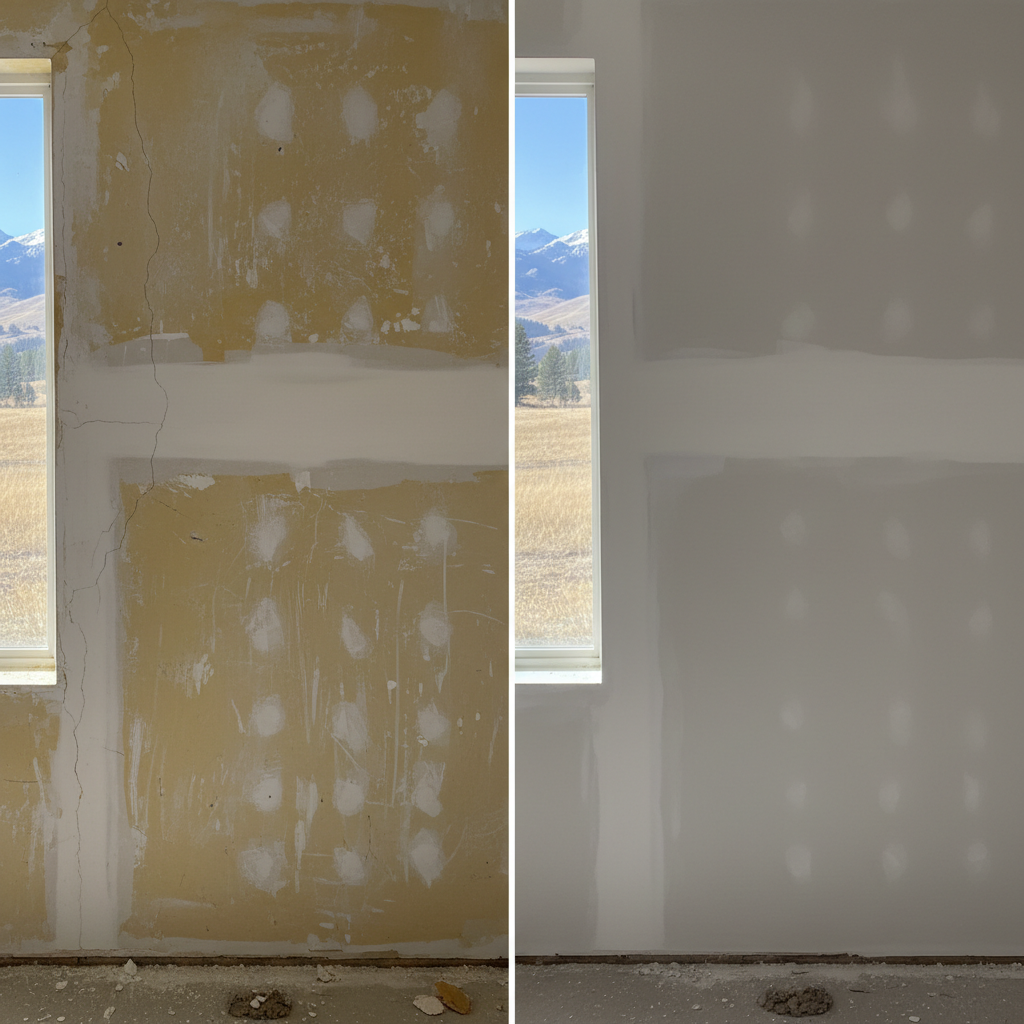
You've got a hole in your drywall, right? Maybe from moving furniture, or a plumbing leak, or just an old anchor finally giving way. So, what now? You're probably wondering if you can just slap a patch on it, or if you actually need to tear out a bigger section. It's a common question I get from folks all over Billings, from the older homes in the North Side to the newer builds out in the Heights.
The Quick Fix: Patching Drywall
Patching is usually the first thing homeowners think of, and for good reason. It's often the quicker, less invasive, and cheaper option. We're talking about fixing smaller holes, cracks, or dings here. Think anything from a nail pop to a hole about the size of a baseball.
- Cost: This is where patching really shines. Materials are inexpensive – a patch kit, some joint compound, and sandpaper won't break the bank. If you're doing it yourself, your only cost is materials and your time. If you hire someone like us at Billings Drywall Company for a small patch, it's usually a pretty quick job, so labor costs are lower too.
- Durability: For small, isolated damage, a good patch is plenty durable. If it's done right, it'll hold up just as well as the surrounding wall. The key here, though, is 'done right.' You can't just glob on some spackle and call it a day, can you? It needs proper sanding and feathering.
- Maintenance: Once it's painted, a patch needs no special care beyond what you'd do for the rest of your wall.
- Appearance: This is where patching can get a little tricky. If your existing wall has a smooth texture, matching it isn't too hard. But if you've got a knockdown, orange peel, or skip trowel finish – common textures around here, by the way – getting a truly seamless match can be tough for an amateur. A poorly matched texture sticks out like a sore thumb.
I usually recommend patching for anything smaller than about a foot square, especially if the damage is superficial and the surrounding drywall is solid. It's a great option for those little accidents.
The More Involved Route: Replacing Sections of Drywall
Sometimes, a patch just isn't going to cut it. When you've got larger damage, water damage, or structural issues, replacing a whole section of drywall is the way to go. This means cutting out the damaged area, fitting in a new piece, then taping, mudding, and finishing.
- Cost: Expect this to be more expensive than patching. You're buying bigger sheets of drywall, more joint compound, and it takes more time. If you're hiring a pro, the labor costs will naturally be higher because it's a more involved process.
- Durability: This is the most durable repair option for significant damage. When you replace a section, you're essentially putting in a brand new, solid piece of wall. This is crucial for areas that might see future stress, or if the original drywall was compromised – say, by a slow leak that softened it up.
- Maintenance: Just like patching, once it's painted, it's just like any other part of your wall.
- Appearance: A properly replaced section, finished by someone who knows what they're doing, will be absolutely seamless. It's much easier to blend a new, larger section into the existing texture than trying to make a small patch disappear perfectly into a complex texture. You get a fresh, uniform surface.
I push for replacement when we're dealing with larger holes (say, bigger than a foot by foot), extensive cracking, or any kind of water damage that's softened the drywall. For instance, if you had a pipe burst during a cold snap – which we certainly get in Billings – and a whole section of wall got soaked, you're not patching that. You're cutting it out and replacing it to prevent mold and ensure structural integrity.
My Recommendation for Billings Homeowners
Here's the deal: for small, isolated dings and holes, a good patch is usually fine. You can probably even tackle it yourself if you're handy and the texture isn't too wild. But if you've got anything larger, or if there's any sign of water damage, or if the wall feels soft or spongy, don't mess around with just patching. You need to replace that section.
Why? Because a small patch on a bigger problem is just a band-aid. You'll end up doing the work twice, and you might even create bigger issues down the road. Plus, with our clay-rich soils in some parts of Billings, homes can settle a bit, leading to larger stress cracks that really need a full cut-out and replacement to prevent them from just reappearing.
If you're unsure, or if you've got a textured wall you want to look perfect, give a local pro a call. We can assess the damage and give you an honest opinion on whether a patch will hold up or if you're better off replacing it. Sometimes, spending a little more upfront on a proper replacement saves you a lot of headaches and money in the long run.