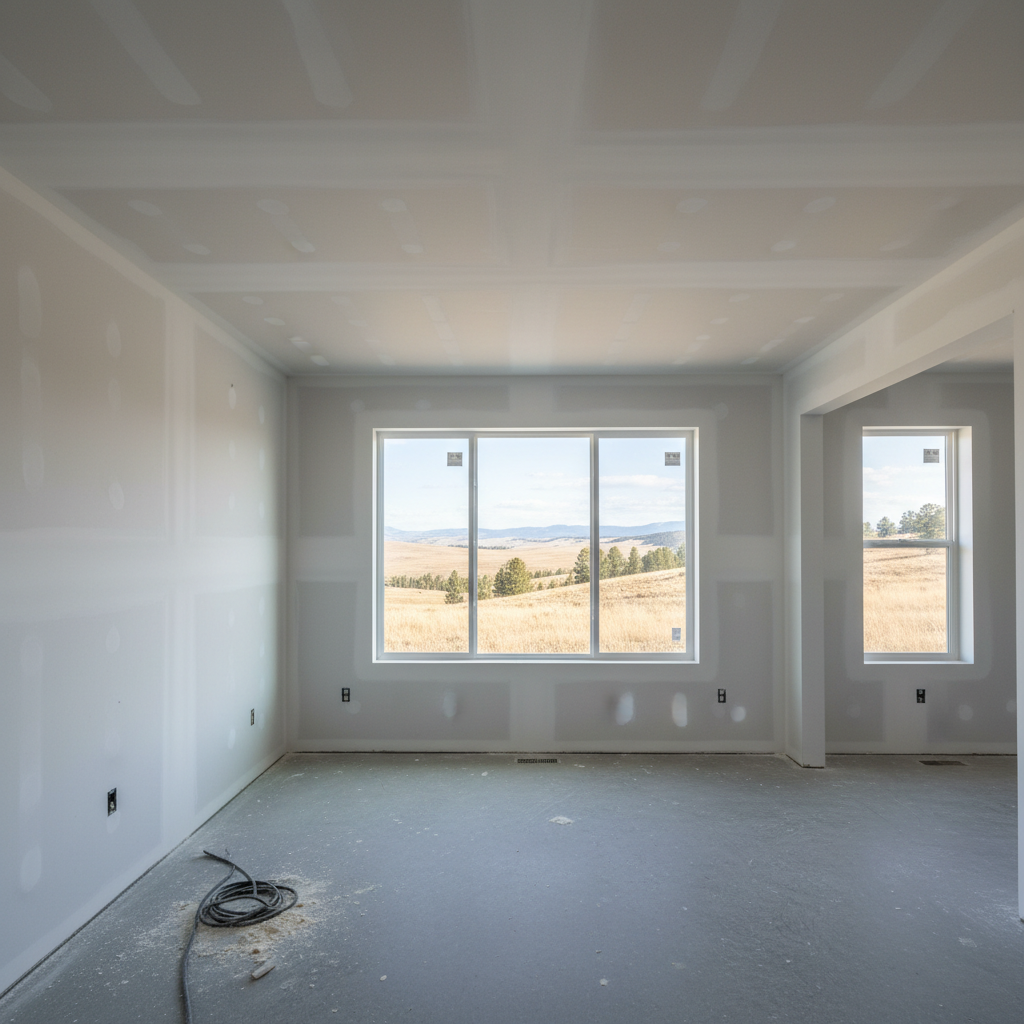
Let's talk about money. Specifically, what you can expect to pay for drywall hanging here in Billings. It's one of the first questions folks ask, and for good reason. Nobody wants to get ripped off, and you want to budget right for your project, whether it's a new build or a renovation.
What Drives Drywall Prices Up (or Down)?
A lot of things factor into the final price tag for drywall. It's not just a flat rate per sheet. Here's what I look at when I'm putting together a quote:
Project Size & Scope: This is a big one. A small patch job is obviously cheaper than drywalling an entire basement. But even within larger projects, the complexity matters. Lots of small rooms with intricate corners and angles take more time and skill than a few big, open walls.
Type of Drywall: Standard 1/2-inch drywall is the most common and least expensive. But sometimes you need something different. For bathrooms and kitchens, you might want moisture-resistant (green board or purple board) which costs a bit more. Fire-rated drywall (Type X) for garages or shared walls is thicker and heavier, meaning more labor and higher material costs. Soundproof drywall? Even more.
Finish Level: This is crucial and often misunderstood. There are different levels of drywall finish, from Level 0 (just hung, no tape or mud) to Level 5 (a perfectly smooth, skim-coated surface, ready for high-gloss paint). Most residential projects aim for Level 4, which is paint-ready with minor imperfections. If you want Level 5, expect to pay more because it requires extra steps and meticulous work.
Accessibility: Is it easy to get materials into the space? Are we working in a tight attic, a cramped closet, or a wide-open living room? If we have to haul sheets up three flights of stairs or navigate around a bunch of existing furniture, it adds to the labor time.
Existing Conditions: Are we tearing out old plaster or damaged drywall first? That's demo work, and it's an extra cost. Are the studs straight and plumb, or do we need to do a lot of shimming to get a flat surface? Prep work adds time.
Ceiling Height: Standard 8-foot ceilings are straightforward. Taller ceilings, like 10 or 12 feet, require lifts, scaffolding, and more careful handling of materials, which increases labor.
Typical Drywall Hanging Cost Ranges in Billings
Alright, let's get to some numbers. Keep in mind, these are averages for Billings and the surrounding areas, and they can fluctuate with material costs and contractor availability. These prices generally include hanging, taping, mudding, and sanding to a Level 4 finish.
Small Repairs/Patches: For a small hole or a few square feet, you're probably looking at a minimum service charge, often between $250 and $500. It covers the trip, materials, and a couple of hours of work.
Single Room (e.g., Bedroom, Small Bathroom): For a standard-sized room, say 10x12 feet with 8-foot ceilings, you might expect to pay anywhere from $800 to $2,000. This varies wildly based on the factors I just mentioned.
Basement Finish (e.g., 800-1000 sq ft): For a larger area like a basement, where you're doing multiple rooms, a bathroom, and maybe some bulkheads, you're usually looking at $4,000 to $10,000+. This is where the price per square foot starts to come down a bit compared to a tiny job.
New Construction (whole house): For a brand new home, you're often quoted by the square foot of wall and ceiling surface. This can range from $1.50 to $3.00 per square foot, depending on complexity and finish level. So, a 2,000 sq ft house might have 6,000-8,000 sq ft of drywall surface, putting the cost in the $9,000 to $24,000 range.
Remember, these are just estimates. The only way to get an accurate price is to get a detailed quote for your specific project.
What Should a Drywall Quote Include?
When you get a quote from Billings Drywall Company, or any reputable contractor, it should be clear and itemized. Here's what you want to see:
Material Costs: This covers the drywall sheets themselves, tape, joint compound (mud), screws, corner bead, and any specialized materials like moisture-resistant board.
Labor Costs: This is the time it takes for hanging, taping, mudding, and sanding. It'll often be broken down by task or just as a lump sum for the entire process.
Finish Level: It should specify what finish level they're providing (e.g., Level 4, paint-ready).
Cleanup: Make sure they're responsible for cleaning up all the drywall dust and debris. Trust me, you don't want to do that yourself.
Timeline: An estimated start and completion date.
Payment Schedule: How and when payments are due.
How to Avoid Overpaying for Drywall
Getting a fair price doesn't mean picking the cheapest guy. It means getting good value for your money. Here's how you can do it:
Get Multiple Bids: Always get at least three detailed quotes. This helps you compare not just prices, but also what each contractor includes. Sometimes a slightly higher bid includes better materials or a higher finish level.
Be Specific About Your Needs: Don't just say, "I need drywall in my basement." Tell them about the finish level you expect, if there are any special types of drywall needed, and any tricky areas. The more information you provide, the more accurate the quote will be.
Understand the Finish Level: This is where people often get surprised. If you're expecting a perfectly smooth wall for dark, glossy paint, but only paid for a standard Level 4, you'll be disappointed. Discuss this upfront.
Ask About Material Sourcing: Some contractors get better deals on materials. It's worth asking if they pass those savings on. Here in Billings, we deal with some pretty dry air, especially in winter, so using good quality mud that doesn't dry too fast or crack is important. A good contractor knows this.
Check References & Insurance: This isn't about price directly, but it prevents you from paying twice. If a contractor isn't insured and something goes wrong, you could be on the hook. Always verify they're licensed and insured.
Don't Rush: Good drywall work takes time. If someone is offering to do a whole house in a weekend for next to nothing, that's a huge red flag. You'll likely end up with shoddy work that costs more to fix later.
Ultimately, a good drywall job is an investment in your home. You want it done right the first time. Take your time, ask questions, and choose a contractor you trust.